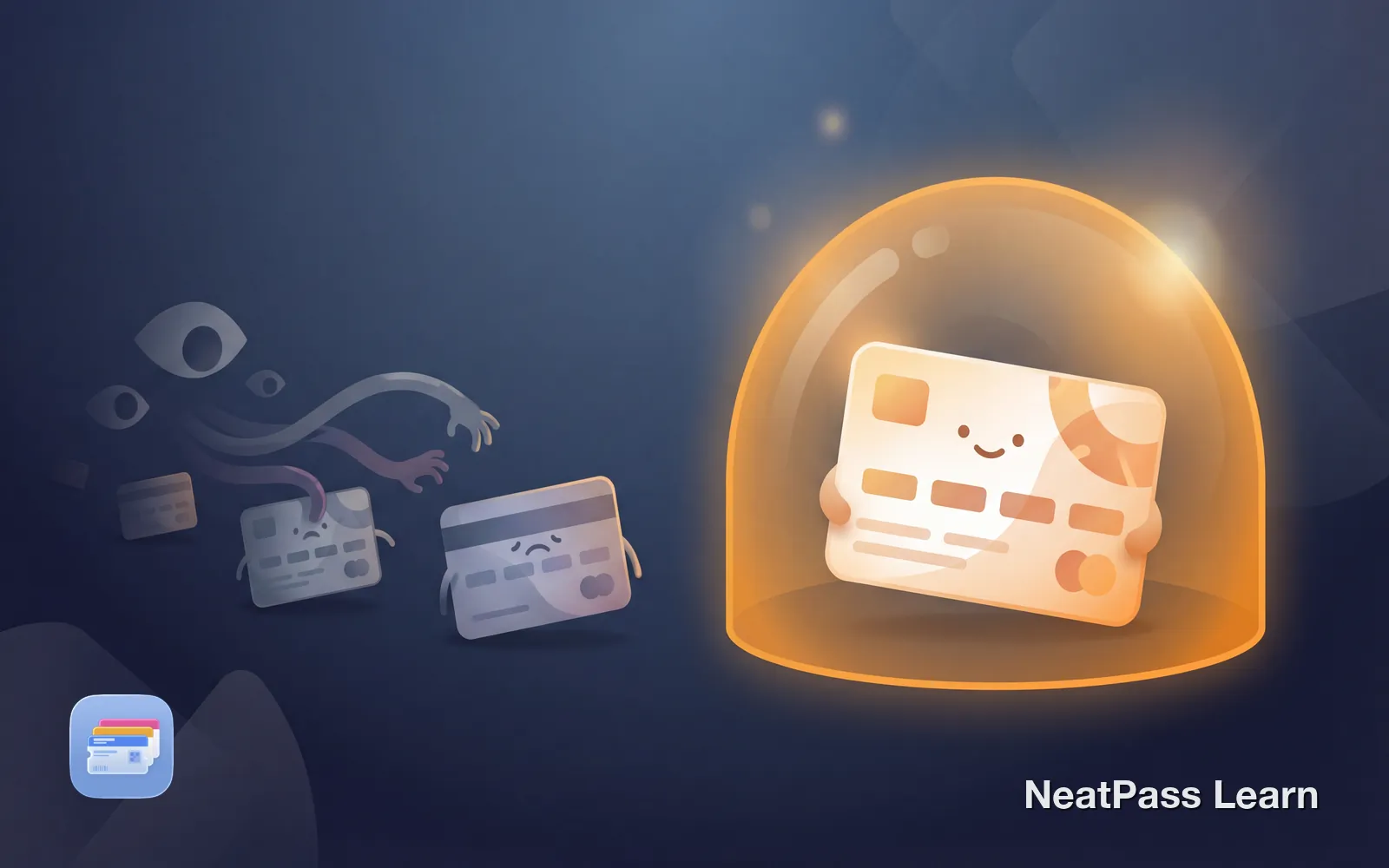
That free coffee reward might cost more than you think. Your loyalty card app likely knows where you shop, what you buy, when you visit stores, and even how long you spend browsing. This data is often shared with advertisers, data brokers, and sometimes even government agencies.
If you've ever wondered why you see eerily accurate ads after visiting a store, your loyalty app might be the culprit. Here's what's really happening behind the scenes and how to take back control of your privacy.
What Data Do Loyalty Apps Collect?
Most loyalty card apps collect far more information than needed to show you a barcode at checkout. Here's what typical apps gather about you:
Location tracking
GPS data tracks where you go, even when the app isn't open
Purchase history
Every transaction linked to your profile across stores
Device information
Device ID, model, OS version, and other apps installed
Browsing behavior
What offers you view, how long you spend in the app
Contact details
Email, phone, sometimes access to your contacts
Behavioral profiles
AI-generated predictions about your preferences and habits
The real scale of tracking
How Your Data Gets Monetized
Loyalty apps don't just collect data for better recommendations. Your information is often the product being sold. Here's how it works:
Direct Data Sales
Some apps partner directly with data brokers through software development kits (SDKs) embedded in the app. When you grant the app location permission, every third-party SDK gets that same access. One leaked email revealed data brokers offering developers $1-4 per user per year for their location data.
Real-Time Bidding
Every time you see a targeted ad, your personal information goes through an auction called real-time bidding (RTB). The concerning part? While only one advertiser wins, all participants in the auction receive your data. This has been described as one of the most privacy-invasive systems most people have never heard of.
Who Buys This Data?
Your information can end up with hedge funds, insurance companies, advertisers, and even government agencies. One data company, Mobilewalla, collected data on over a billion people, selling it for purposes including tracking union organizers and compiling home addresses.
Ready to protect your privacy?
NeatPass makes it easy to convert any ticket, pass, or loyalty card to Apple Wallet.
The Stocard Example
Stocard, one of the most popular loyalty card apps, was acquired by Klarna in 2021. According to their own marketing materials for retailers, Stocard can:
- Target campaigns "based on a customer's actual interests and shopping behavior"
- Match location data with loyalty card usage to measure in-store purchases
- Track store visits even for non-cardholders
In 2024, Klarna was fined under GDPR for providing inadequate information to users about how their personal data was being processed. This highlights a common pattern: even well-known apps may not be transparent about their data practices.
The Real Risks
Beyond targeted ads, there are serious risks to consider:
Data breaches
More data stored means more data that can be stolen
Price discrimination
Companies use data to charge you the maximum you'll pay
Profiling
Detailed profiles can affect insurance rates and credit
Permanent records
Data is often retained indefinitely once collected
The Privacy-First Alternative
Not all wallet apps work the same way. NeatPass was designed with a fundamentally different approach: your cards stay on your device, and NeatPass never sees them.
- Require account creation with personal info
- Store your cards on company servers
- Track location and purchase behavior
- Share data with advertisers and brokers
- May sell or expose your data in breaches
- No account required, ever
- All processing happens on your device
- No location tracking or analytics
- Zero data sharing with third parties
- Nothing to breach because nothing is collected
When you scan a barcode or import a card with NeatPass, the data never leaves your iPhone. The pass is created locally and added directly to Apple Wallet, where it's protected by Apple's security measures and backed up through your own iCloud account.
For more details on how NeatPass handles your privacy, see the Privacy FAQ.
How to Protect Yourself
Whether or not you switch apps, here are steps to reduce loyalty app tracking:
Audit App Permissions
Enable App Tracking Transparency
Use Apple Wallet Instead
Request Your Data
Frequently Asked Questions
Ready for a private wallet?
DownloadTake Back Control
The convenience of loyalty apps shouldn't come at the cost of your privacy. Every barcode you scan and every store you visit doesn't need to become a data point in someone's advertising profile.
Apple Wallet offers a better model: your cards live on your device, work offline, and don't report back to anyone. Add widgets for instant access from your home screen. With tools like NeatPass, you can move your existing loyalty cards there without losing any functionality.
Start today